
February 2026 The Shift e-newsletter
FREE Webinar: IRS 45Q Tax Credit | Canada's Clean Fuel Regulations | Carbon Footprint vs. Intensity
Free Webinar: The Critical Role of Life Cycle Assessment in Securing the 45Q Tax Credit
DATE: Thursday, February 19th, 2026
TIME: 1pm - 2pm EST
PRESENTERS:
Mariana Ortega Ramirez, Sr. Sustainability Analyst
Nowell Stoddard, Jr. Sustainability Analyst
EarthShift Global
Description:
Section 45Q of the U.S. tax code is designed to incentivize carbon capture, utilization, and storage by providing a performance-based federal tax credit.
Under Section 45Q, companies can generate tax credits based on the amount of qualified carbon dioxide captured, utilized, or permanently stored – creating a dollar-per-ton opportunity tied directly to project design and performance.
To support a 45Q application, the IRS requires documentation demonstrating net greenhouse gas reductions. Life cycle assessment (LCA) plays a central role in this process, shaping eligibility, credit value, and the ability of results to withstand independent review.
EarthShift Global brings deep, hands-on experience applying LCA to 45Q projects – from early scoping and system boundary definition through data integration and review preparation. In this free Brown Bag Webinar, our team shares practical insight into the real-world decisions that underpin defensible analyses and successful 45Q outcomes.
About the Speakers:
Mariana Ortega Ramirez is a Senior Sustainability Analyst at EarthShift Global with extensive experience in life cycle assessment and sustainability analysis across agriculture, textiles, industrial processes, and energy systems. Prior to joining EarthShift Global, she led a sustainability consulting practice focused on agriculture, forestry, livestock, and fisheries, supporting consulting firms, government agencies, and non-profits. At EarthShift Global, Mariana works on LCAs and policy-driven analyses, including projects supporting the 45Q tax credit. Her work spans material flow accounting, handprint assessments, S-ROI, and LCA for climate and energy programs, with a strong emphasis on translating technical analysis into defensible, decision-ready insights.
Mariana holds a Bachelor’s degree in environmental engineering from the National Polytechnic Institute in Mexico and an Erasmus Mundus Master’s in Industrial Ecology, with specialization in LCA at Leiden University’s Institute of Environmental Sciences (CML).
Nowell Stoddard brings a multidisciplinary background in life cycle assessment (LCA), physics, and education to sustainability consulting. He holds a bachelor’s degree from Bard College and a master’s degree in physics, with a focus on energy and climate, from Radboud University. Since joining EarthShift Global in 2024, Nowell has contributed to LCAs across electronics, carbon capture, textiles, and end-of-life modeling, including work supporting 45Q-related projects. His expertise includes the quantitative assessment of material and energy systems, with particular experience in electronics reuse, circularity, and semiconductor and chip reuse research.
Prior to graduate study, Nowell taught math and science in Midcoast, Maine. His background in computational modeling and condensed matter physics continues to inform his analytical approach to sustainability and environmental decision-making.

Considering the IRS 45Q Tax Credit? Lessons Learned from Life Cycle Assessment Work with Clients
Author: Mariana Ortega Ramirez, Sr. Sustainability Analyst
In early 2024, EarthShift Global shared an overview of the 45Q tax credit requirements, including the central role life cycle assessment (LCA) plays in supporting the credit, in EarthShift Global’s January 2024 Brown Bag Webinar. Since then, additional guidance from the IRS, the U.S. Department of Energy's (DOE) Office of Fossil Energy and Carbon Management, the National Energy Technology Laboratory (NETL) and practical experience have clarified how 45Q LCAs must be structured, documented, and reviewed.
Through our work with clients pursuing the credit, several key considerations have emerged that can help project teams understand when to move forward – and what to expect.

Navigating Canada’s Clean Fuel Regulations
Author: Sarah Donovan, Sustainability Analyst
Canada has set targets to reduce greenhouse gas emissions by 45-50% below 2005 levels by 2035, ultimately reaching net-zero emissions by 2050 (Government of Canada, 2025). To help achieve these lofty goals, Canada has implemented several regulations and carbon pricing mechanisms, including the Clean Fuel Regulations (CFR).
The purpose of these regulations is to reduce the life cycle carbon intensity (CI) of gasoline and diesel over time (with gaseous and solid fuels added to the regulation at a later date), reflecting a shift from focusing only on combustion emissions when fossil fuels are used, to life cycle-based emissions accounting.
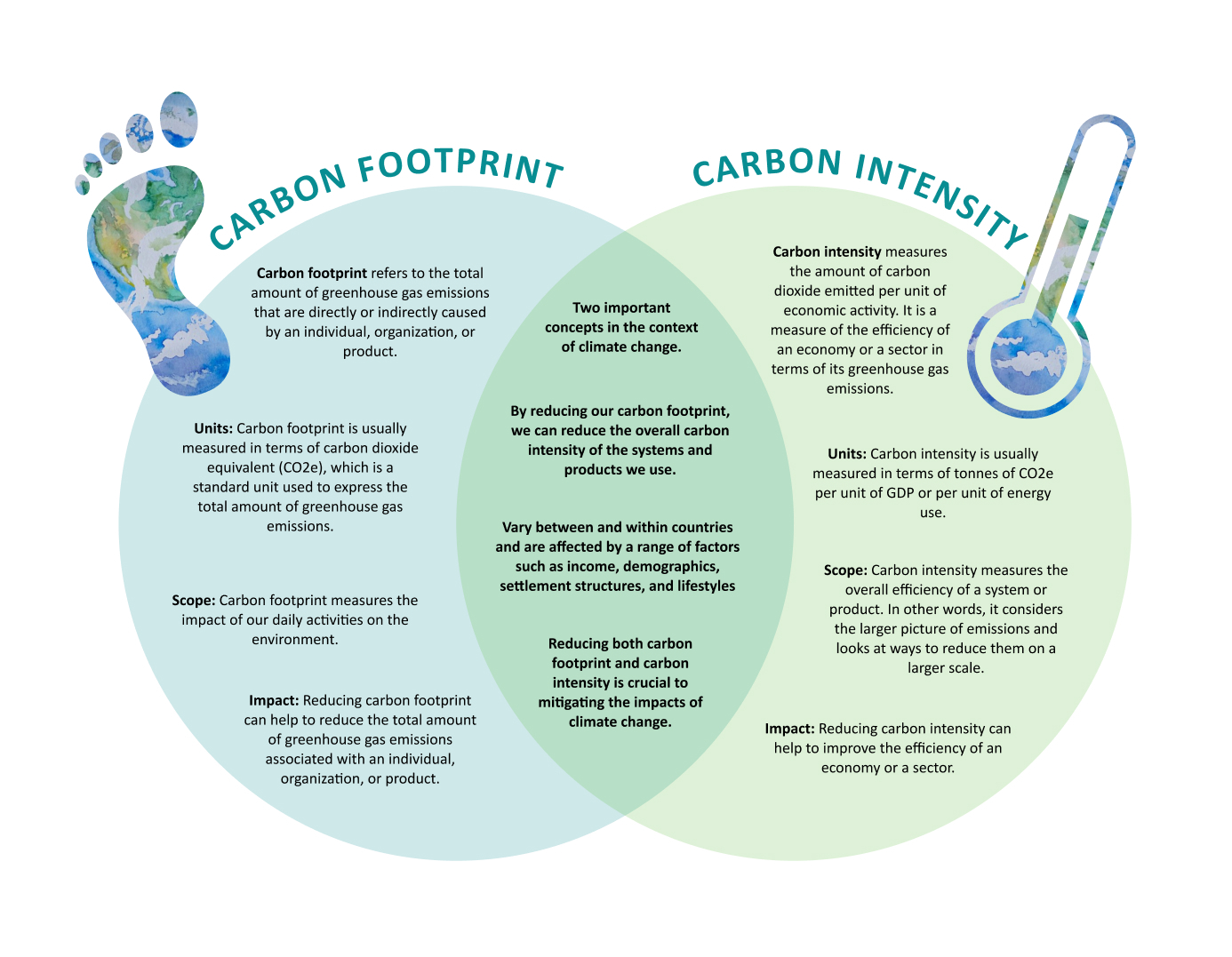
Carbon Footprint vs. Carbon Intensity: What’s the Difference?
Author: Amos Ncube, Senior Sustainability Advisor
This month, we’re highlighting one of our most-read blogs – Carbon Footprint vs. Carbon Intensity. This article breaks down these two commonly confused climate metrics and explains why the distinction matters.
Carbon footprint captures total greenhouse gas emissions across the life cycle of a product, organization, or activity, while carbon intensity focuses on emissions relative to output, such as per unit of energy, fuel, or economic activity.
Understanding how these metrics differ – and how they work together – is essential for developing effective emissions reduction strategies, setting meaningful targets, and tracking progress toward climate goals.
Upcoming Training
We’re preparing our 2026 training offerings and look forward to sharing more soon.
Thank you for your continued interest and engagement.